When Lancashire’s first colder spell arrives, heating firms rarely get a polite, evenly spaced queue of enquiries. The phone can jump from a routine boiler-service request to a no-heating household, a landlord chasing access and someone reporting a possible gas escape—all while the engineers are already driving, diagnosing faults or working in customers’ homes.
That is why boiler season call handling should be designed before the rush, not improvised during it. The goal is not to make every caller sound urgent. It is to recognise safety-critical language immediately, collect the right facts once and give every legitimate enquiry a clear next step.
The seasonal shift is predictable enough to plan for. The Met Office’s long-term averages for Stonyhurst show typical minimum temperatures falling markedly through September, October and November. Individual years will vary, but a heating business does not need a precise forecast to prepare its phone workflow.
Why boiler-season calls become hard to control
The problem is not simply “more calls”. It is several kinds of call arriving through the same number. A price shopper, a regular customer with a fault code, a tenant without heating and a suspected gas emergency need different responses. If they all become identical voicemail messages, the owner must listen again, chase missing details and decide priorities from scratch.
Lancashire geography adds a practical constraint. A firm might cover Morecambe and Lancaster on one day, then have engineers around Preston and Leyland on another. Others may work mainly across the Fylde coast or east Lancashire. A useful call process therefore checks the postcode before suggesting an appointment or arrival window. Local relevance comes from honest routing—not from pretending every town is equally close at every moment.
Build three call lanes before demand rises
Lane 1: safety-critical reports
If a caller says they smell gas, suspect a gas leak or believe carbon monoxide may be involved, the conversation should switch immediately to the business’s approved emergency wording. Gas Safe Register directs people in Great Britain to the National Gas Emergency Service on 0800 111 999; LPG customers should contact their supplier. This instruction should never be buried behind booking questions.
An automated receptionist must not diagnose the appliance, reassure the caller that it is safe or invent instructions. Its job is to recognise agreed phrases, deliver the approved emergency direction and record that the safety path was triggered. The company should review this script with a competent person and test it using realistic wording before launch.
Lane 2: urgent heating or hot-water failures
“No heating” does not describe the whole job. A useful intake asks for the postcode, property type, appliance or system type if known, visible fault code, whether there is hot water, when the problem started and the best callback number. It can also flag circumstances the firm has decided to prioritise, without asking for unnecessary sensitive information.
Urgent does not automatically mean an immediate appointment. The call workflow should state what can genuinely be offered: a live transfer during defined hours, a priority callback, or the next suitable slot. Clear expectations protect the engineer from promises made while they are under a floorboard or halfway through another repair.
Lane 3: routine work and quote enquiries
Servicing, radiator work, planned replacements and non-urgent quote requests still matter during the rush. They should not disappear beneath emergency messages. Capture the job type, postcode, property details relevant to the quote, preferred timing and whether photographs or further information will be needed. Then create a structured callback or booking request rather than a vague note saying “customer wants a price”.
A better journey from ringing phone to booked work
1. Answer with the business’s real rules
Start with an approved knowledge set: services offered, areas covered, opening hours, out-of-hours policy, booking rules and subjects that always require a person. If something is unknown, the safe response is to collect a message or arrange a callback—not guess.
2. Check safety language before sales questions
The order matters. A safety trigger belongs near the beginning of the conversation. Only after that check should the receptionist continue with postcode, system details and availability. Anyone employed to work on domestic gas appliances must be Gas Safe registered and competent in the relevant area of work, as the Health and Safety Executive explains.
3. Confirm the service area before offering a slot
Use postcode rules that match how the firm actually operates. These might include a core area, an extended area requiring confirmation and locations not currently served. The rules can also vary by job type: a planned installation may justify a longer journey than a small repair. Review border postcodes manually so promising enquiries are not rejected by an overly blunt filter.
4. Match the outcome to available capacity
If the calendar and booking workflow are supported, routine appointments may be booked against real availability. When engineer skills, parts or fault complexity must be checked first, create a qualified callback instead. CallKind is configured around approved systems and handover rules; its discovery, testing and controlled-launch process is designed to establish those boundaries before calls are routed live.
5. Send a summary that can be acted on
A useful call summary should show the caller, contact number, postcode, issue, safety status, urgency lane, promised next step and any timing constraint. Put the outcome near the top: booked, transferred, callback required or emergency guidance given. That lets a manager scan the queue between jobs without replaying every conversation.
What automation should handle—and what people should decide
Automation is strongest where the decision is repeatable. It can answer from approved information, collect consistent details, check a defined service area, request a callback, send a confirmation and produce a concise summary. CallKind’s trades workflow is built around location, job type, urgency screening and routing.
Human judgement still belongs in unusual technical questions, complaints, disputed work, complex diagnostics and any case outside the approved rules. The handover should be explicit: transfer now, mark for urgent review, or give a realistic callback window. “The AI will work it out” is not a safe operating policy.
A seven-day boiler-season preparation plan
Day 1: Review recent calls and group them into safety, urgent failure, routine repair, service, quote and existing-job categories. Day 2: Write the minimum questions needed for each group. Day 3: Map postcodes and genuine travel limits. Day 4: Decide what can be booked, transferred or sent for callback.
Day 5: Approve emergency wording and fallback responses. Day 6: Test calls using accents, vague descriptions, interruptions and callers who change their answer. Day 7: begin with a controlled period—such as missed calls or after-hours enquiries—and review every outcome before expanding. Current CallKind packages and included features are set out on the pricing page; exact integrations and setup requirements depend on the business.
Measure whether the workflow is helping
Do not judge the system only by how many calls it answers. Track whether enquiries have complete contact details, whether safety triggers take the correct path, how many callbacks are still missing information, how often postcode rules need correction and whether promised follow-ups happen. Review failed or awkward calls as carefully as successful bookings; they show where the knowledge or routing needs improvement.
Frequently asked questions
Can an AI receptionist decide whether a boiler is safe?
No. It should not diagnose or declare an appliance safe. It can recognise approved warning phrases, give the official emergency direction and escalate according to rules the business has reviewed and tested.
Can we keep our existing business number?
Calls can usually be forwarded from the existing number all the time, outside opening hours or only when the team cannot answer. The routing arrangement should be confirmed with the relevant telephone provider and tested before launch.
Can it cover only the busiest periods?
Yes. A controlled start may cover missed calls, evenings or selected periods, then expand after the business has reviewed real outcomes and refined its rules.
How should a Lancashire firm define its service area?
Use postcodes based on genuine travel capacity, engineer location and job type. Keep a review lane for edge cases instead of treating every postcode as an automatic yes or no.
Will every enquiry be booked automatically?
Not necessarily. Straightforward work may be booked where a supported calendar and clear rules are available. Technical, capacity-dependent or unusual jobs are often better captured as structured callbacks for human review.
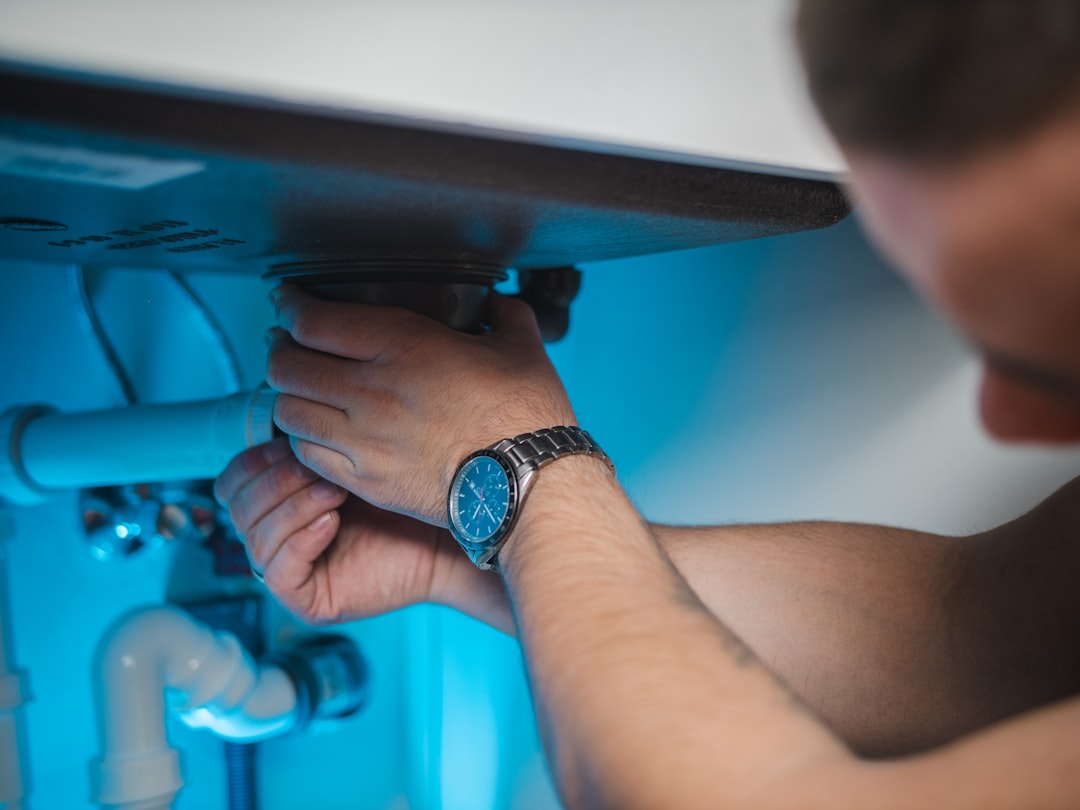
Featured photograph by Timur Shakerzianov via Unsplash.
Make the next boiler-season call easier to handle
A clear call plan gives customers a useful next step while engineers stay focused on safe work. Hear how Ava can identify pain points, check a postcode, arrange a callback and prepare a customer confirmation in CallKind’s live personalised plumbing demo. For a workflow review tailored to your business, you can also contact CallKind.