A facilities manager reports water spreading across a stockroom. The address is in the diary, an engineer is nearby and the job sounds urgent. Then the engineer arrives to find a locked service yard, no site contact and no authority to isolate the affected system.
That is why commercial plumbing call handling needs more than a fault description. Before a plumbing or heating firm commits time, the first conversation should establish the site, the operational impact, who can grant access and what decision the caller actually needs.
For Lancashire firms serving offices, shops, hospitality venues, schools, care settings or light-industrial premises, a consistent intake process can turn a vague “send someone now” request into a useful, safe handover.
A commercial enquiry contains three separate jobs
The caller describes a plumbing problem, but the reception task is broader. First, understand what is happening without attempting a technical diagnosis. Second, establish how an engineer can enter and work at the site. Third, confirm who is authorised to approve attendance, a quotation or further work.
Missing any one of those parts creates friction. A clear fault description is little use if the engineer cannot get through security. A named site contact is not enough if nobody can approve the quoted work. A purchase-order reference does not make an unsafe situation suitable for an ordinary callback queue.
Start with the decision, not the diagnosis
Ask what the caller wants the plumbing firm to do. Are they reporting a new fault, requesting an estimate, asking for an engineer to attend, chasing an existing job or seeking advice about immediate safety? Those routes need different information and different promises.
The receptionist should not decide the technical cause or guarantee attendance unless the business has approved that action. The aim is to collect enough accurate information for the right person—or an approved booking rule—to make the next decision quickly.
Six checkpoints before you promise a visit
1. Identify the requester and the responsible organisation
Capture the caller’s name, role, organisation, direct number and email. Then ask whether they are the person who can approve the next step. A tenant, duty manager, managing agent and facilities contractor may all describe the same leak, but they may have different authority.
If another organisation will pay, record its name and the approved billing contact or reference your process requires. Do not turn the call into a credit-control interrogation; simply make the approval gap visible before dispatch.
2. Pin down the exact working location
A postcode identifies an area, not the plant room. Confirm the complete site address, building or unit, floor, affected area and the best entrance. Large premises may also need a reception desk, loading-bay or gate instruction.
Ask whether the callback number belongs to someone who will remain on site. If not, collect the on-site contact separately. That prevents an engineer ringing a remote head office while waiting outside a locked building.
3. Describe the impact in the caller’s words
Useful questions include what the caller can see, when it began, which areas are affected and whether water is still flowing. For heating enquiries, ask which parts of the building are without heat or hot water and whether the issue affects a scheduled activity.
Record observations, not conclusions. “Water is entering the ground-floor stockroom” is useful. “The main has failed” is a diagnosis the caller or receptionist may not be qualified to make.
4. Capture access and working restrictions
Ask about opening hours, keys, security sign-in, parking or loading access, restricted areas and any required site induction. Where relevant, record whether the responsible site team has identified hazards or special controls that must be discussed before work begins.
The Health and Safety Executive’s guidance on using contractors, updated on 7 August 2025, highlights identifying the job, assessing risks, providing information and cooperating with contractors. A call script does not replace those responsibilities, but it can make sure access and safety questions reach the right person before attendance.
5. Separate emergency instructions from commercial urgency
A shutdown affecting trading can be commercially urgent without changing the business’s safety rules. Conversely, a suspected gas or carbon-monoxide emergency should not sit in an ordinary quote or callback route.
For a suspected gas leak, carbon-monoxide emergency or struck gas pipe, the National Gas Emergency Service says to call 0800 111 999 immediately; the number is free and available 24 hours a day. Your reception workflow should use current approved emergency wording and avoid delaying that action with routine sales questions.
6. Confirm the next authorised action
Finish by stating what has been agreed: an approved booking, a technical callback, a quotation review or an urgent escalation. Confirm who owns that action and what the caller should expect next. If timing depends on capacity, say so plainly rather than inventing an arrival promise.
For quotation enquiries, the existing plumbing lead qualification process helps separate approved prices, site visits and human review. For attended work, the plumbing call summary template shows how to pass confirmed details to the engineer.
A Lancashire commercial-site example
Imagine a Lancashire team receives three calls: a café manager reports a leaking wash area, a school administrator requests a heating quotation and a warehouse supervisor reports water near stored goods. All three sound like commercial plumbing enquiries, but they should not follow one identical route.
The café call needs the affected area, flow status, trading impact and an on-site contact. The school request may need an authorised survey appointment and access information before a quote can be prepared. The warehouse report needs a clear description, immediate safety screening, gate instructions and a capacity decision from the responsible person.
The locations could be minutes apart or on opposite sides of the county; distance alone does not determine priority. The business’s approved rules should weigh safety, active damage, site access, engineer suitability and existing commitments.
Turn the intake into an engineer-ready brief
A useful handover should let the engineer or duty manager answer five questions quickly: who is requesting help, where exactly is the issue, what has been observed, how can the site be accessed and what decision is required?
Keep caller statements separate from confirmed business decisions. Record corrections rather than leaving two competing phone numbers or addresses in the notes. If a detail is unknown, label it unknown; guessing creates more risk than an explicit gap.
Where an AI receptionist can help
CallKind can answer 24/7 and, depending on the configured setup, qualify enquiries, create callbacks, make approved bookings and send call summaries. For commercial plumbing call handling, the value comes from following the same intake rules consistently while engineers remain focused on live work.
The assistant should be configured around your actual services, site boundaries, safety wording, approval limits and escalation contacts. CallKind’s How It Works page explains that discovery, configuration and realistic testing process. You can also review the Industries and Pricing pages.
Review the exceptions, not just the call count
After launch, review enquiries that could not be routed cleanly. Look for repeated missing access details, unclear approval routes, duplicate site records and promises that staff could not keep. Each exception points to a rule, question or handover field that needs improving.
The goal is not a longer script. It is a shorter path to a reliable decision. Remove questions that do not change the route, and add only the details that help the customer, engineer or responsible manager take the next action.
Frequently asked questions
What should a commercial plumbing receptionist ask first?
Start with the caller’s requested action, their organisation, the exact site and what they can currently observe. Then collect access, authority and safety information that is relevant to the approved route.
Should the receptionist diagnose the plumbing fault?
No. The receptionist should capture clear observations and use approved routing questions. Diagnosis, technical advice and work decisions should remain with appropriately competent people.
Do commercial jobs always need a purchase order?
No universal rule applies. Your own customer agreement and approval process should determine whether a purchase order, job reference, named authoriser or another confirmation is required.
Can an AI receptionist promise an emergency engineer?
Only if the plumbing firm has supplied a reliable rule that confirms eligibility and live capacity. Otherwise, it should collect the right information and escalate the decision without promising attendance.
How do you stop commercial calls becoming duplicate jobs?
Check the site, affected area, organisation and recent open enquiries before creating a new record. When the match is uncertain, flag it for review instead of merging or duplicating it automatically.
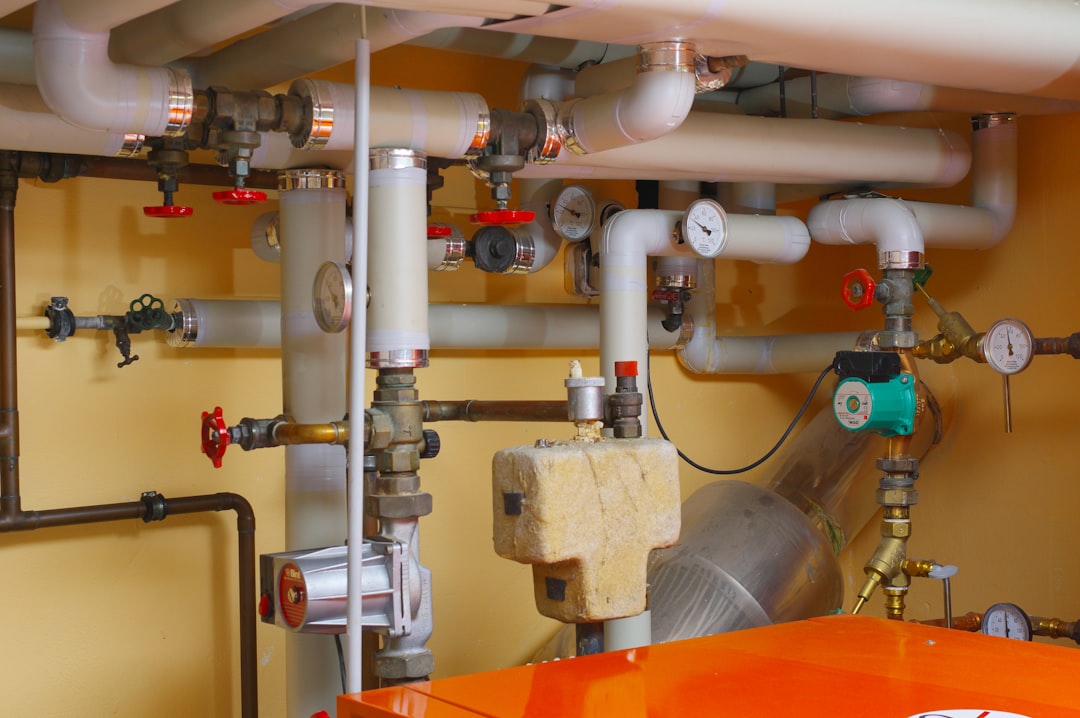
Featured photo by Immo Wegmann on Unsplash.
Make every commercial enquiry ready for a decision
If your plumbing or heating team loses time chasing access details, authorisers and unclear site information, the first conversation is the place to fix it. Try the live personalised plumbing demo and see how a structured receptionist could fit your own rules.